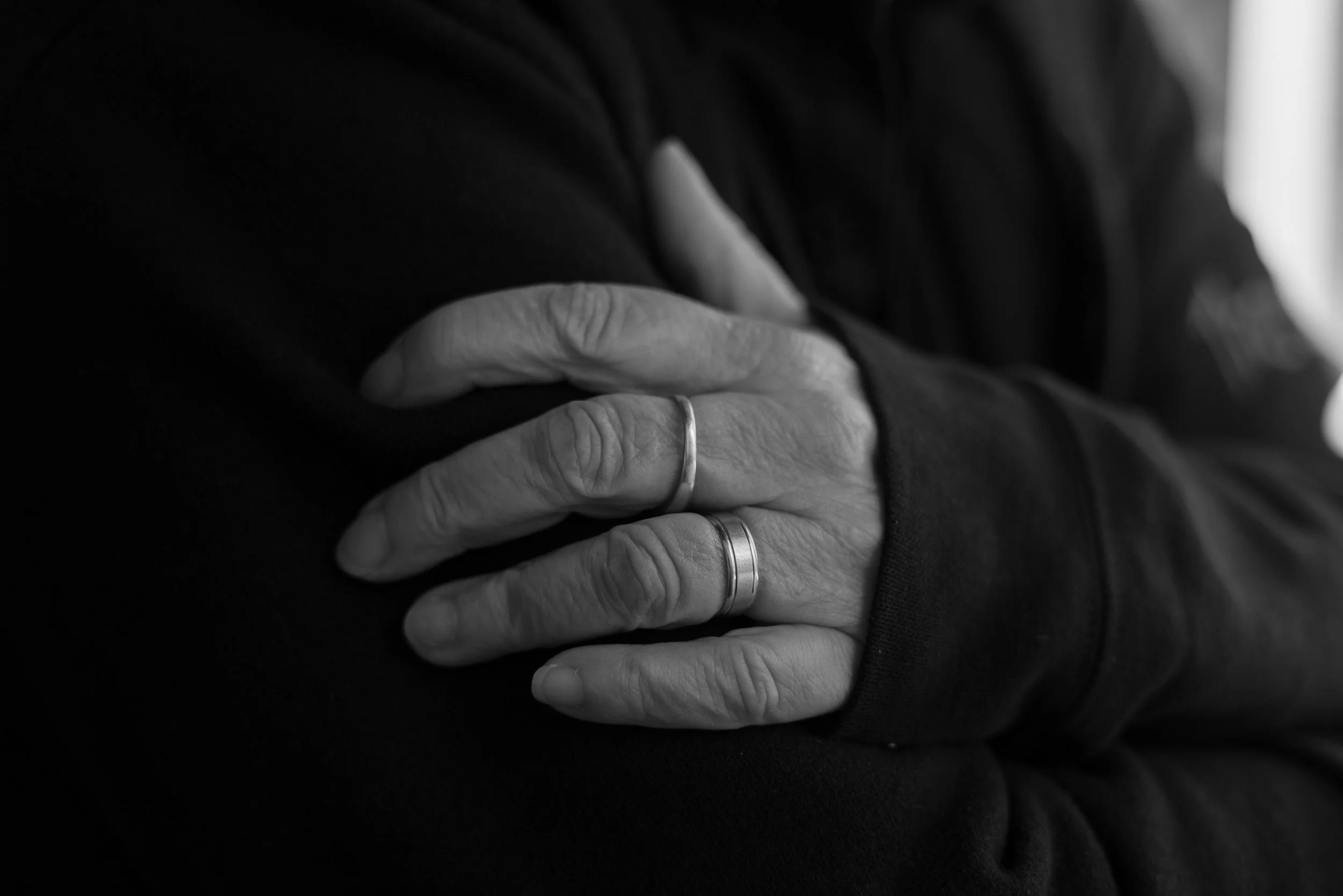
love is free
She spent much of her life searching for a way out. From a childhood marked by abuse to relationships that demanded she become someone she wasn't, Tiger learned early that love and safety didn't always exist together.
At 63, after decades of heartbreak, survival, and learning to embrace who she truly is, she shares the meaning behind a belief she now carries with her:
“Love is free. And just be yourself. And your soulmate will love you for you.”
A story of survival, identity, and finding a love she no longer had to escape.
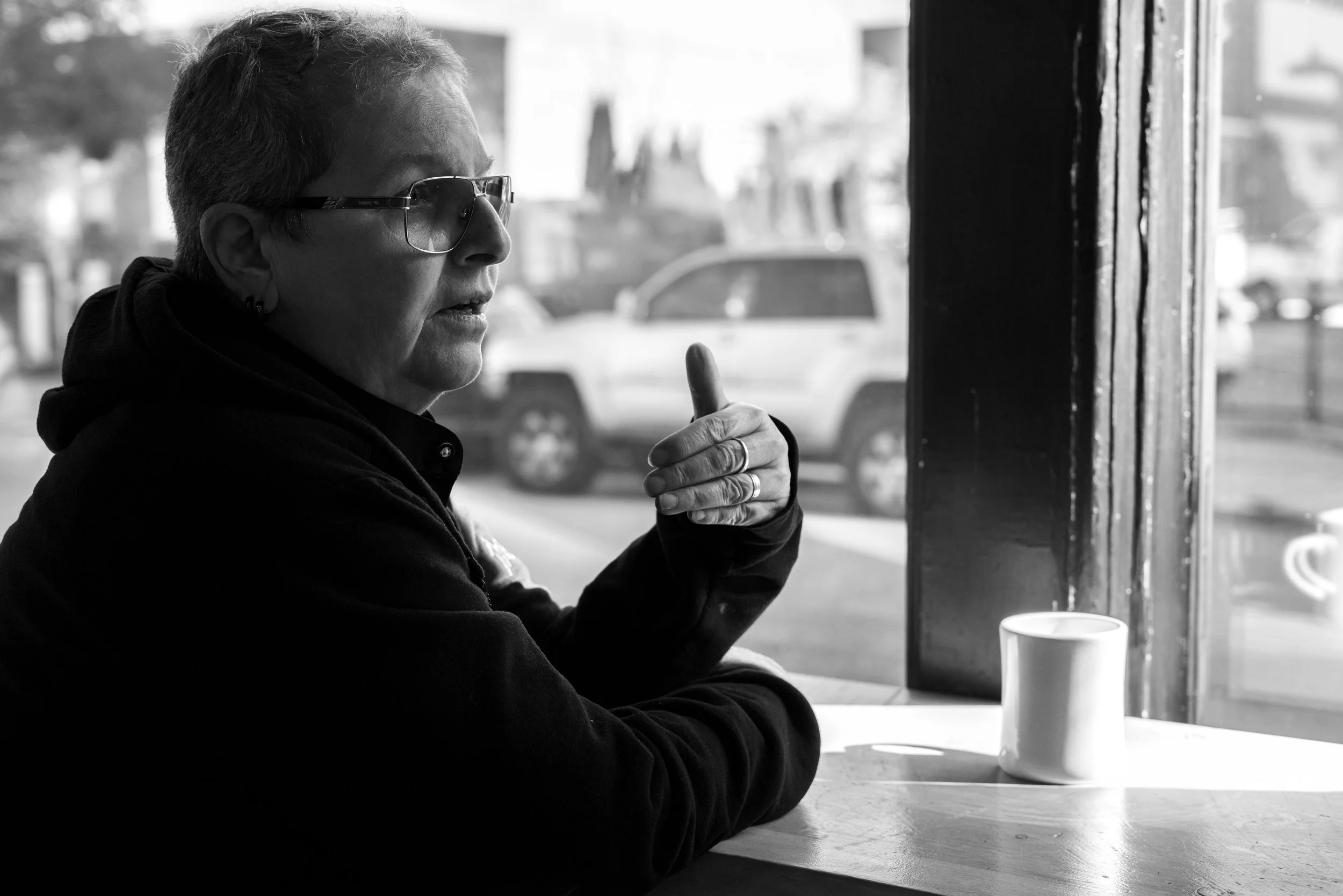
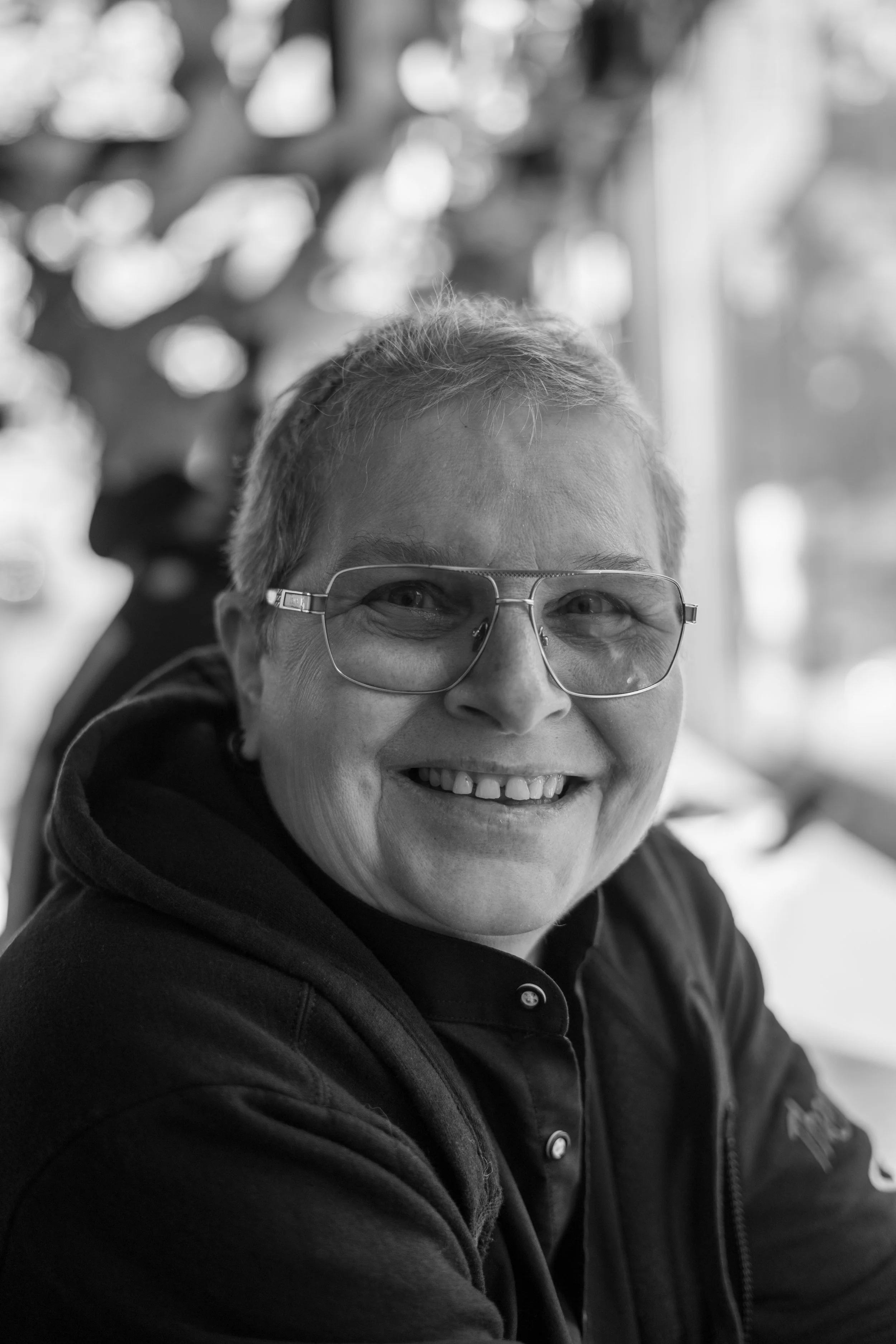
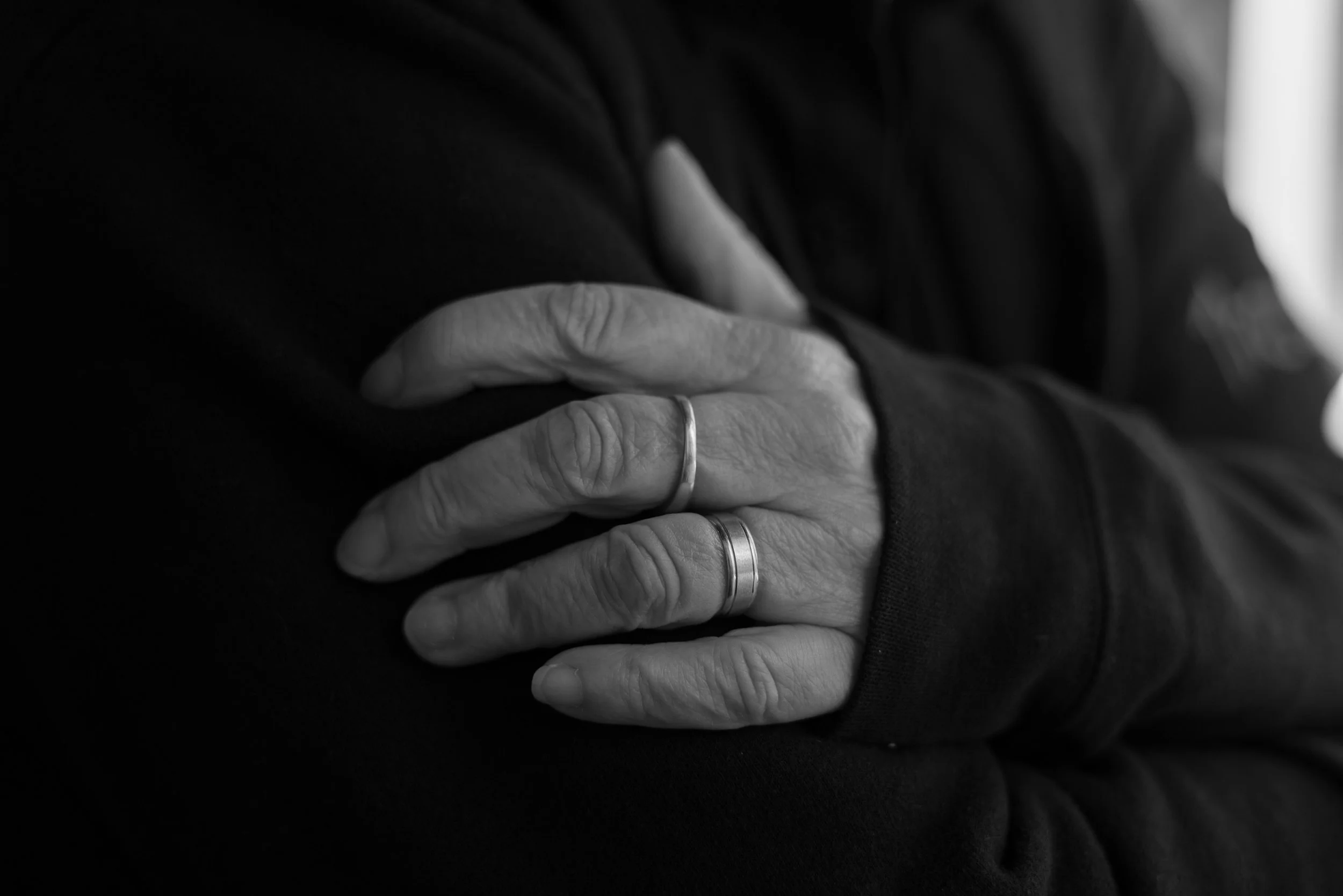
When I ask about her childhood, she begins with her father.
"My father was in the military. He was on the sub."
"He was abusive to my mom. Emotionally, physically, yeah. I black out some of it. He's an alcoholic."
Her father would spend six months away aboard submarines and six months at home.
"When he went out on this sub, we were happy. And my mom was relieved."
She remembers living in Italy. One day, her mother was cleaning a table when a piece of marble fell and broke it.
"My father didn't ask my mom how she was. He just hit her, and was more worried about his marble."
The violence wasn't limited to her mother.
"And he'd take his sexual desires out for us children. I have an older sister and a younger brother, so all of us were abused."
"And that went on till I was 13, 14 years old."
She tells me that there are parts of her childhood she cannot remember.
Other parts have never left her.
At home, the children had a name for their father.
"We called him that man."
"We'd wait for him to leave, so we could talk to my mom."
"It was great when he left, because we'd do things, my mom would be a mom again. You know, she could be the real her."
For six months at a time, the absence of one person allowed the rest of the family to exist without fear.
Her sister sometimes escaped through a bedroom window, climbing outside and using the structure attached to the house to get down.
She couldn't do the same.
Her bedroom was above an addition to the house, and the distance to the ground was too far.
"So I was, like, trapped."
She couldn't escape through the window.
But when she was sixteen, she saw another way out.
She met her first husband when she was fifteen.
Her father taught scuba classes at the submarine base. The young man she would eventually marry was stationed on the same boat as her father.
They were partnered together during a scuba class and began dating.
He was seven years older.
She remembers being at a park when he gave her a promise ring.
"As soon as he did that, I knew it was my escape."
"So, to be honest, I'm the one that pushed the marriage. So I'm 16 going on 17. We get married."
I ask her why she felt she needed to get married so young.
"To get out of the house, so my mom would divorce my father."
Her mother had been afraid to leave while the children were still living at home. Years earlier, her father's mother had taken the children away from her. She remembers seeing her mother speaking to them over a white picket fence.
Her mother wouldn't leave until she knew her children would be safe.
"So the only reason I married him was... so my mom would be okay."
At sixteen, marriage wasn't something she was entering because she'd found the love she'd always wanted.
It was a way to leave.
And she hoped that by leaving, she could give her mother permission to do the same.
But the relationship she entered became another place where she was hurt.
"He was physically, emotionally, and sexually abusive."
The person she'd married to escape an abusive home became another person she needed to escape.
After a motorcycle accident caused by a drunk driver, she waited until they could both walk again.
Then she asked for a divorce.
"I just came home and threw a head of lettuce instead of meat and everything. You know, he wanted his dinner, and I said, "I wanted a divorce."
She was divorced by twenty-one.
And for the first time, she began trying to figure out who she was outside the life she'd been living.
Leaving her marriage did not mean the abuse stopped.
She remembers living with a friend after the separation.
One evening, her friend invited two Navy men over.
She was tired from work.
"I said, I'm gonna drink my beer, and I'm gonna go to bed."
She remembers leaving her beer unattended briefly.
Then she remembers going to her bedroom.
The next morning, something was wrong.
"I woke up in the morning. My blouse is undone. My pants are down to my knees."
"I don't remember nothing."
At first, she dismissed it, assuming she had simply fallen asleep while getting undressed.
Eight weeks later, she collapsed.
She says she learned she was pregnant and had several sexually transmitted infections.
"So I was Roofied."
She had no memory of what happened to her that night.
It was another experience of sexual violence in a life that had already been marked by abuse.
As she tells me what happened, our conversation turns toward the ways childhood experiences can shape how we understand what happens to us later in life.
I share a thought about how repeated experiences of abuse can begin to feel normalized, even when they are deeply harmful.
She agrees.
And when the conversation turns toward blame, she recognizes something familiar.
"Yeah."
The conversation moves on, but something about that exchange stays with me.
She had spent years trying to escape people who hurt her, only to find herself in situations where she was hurt again.
Eventually, the accumulation of everything became unbearable.
"You know how things just finally pile up, and you just..."
She pauses.
"You lose it."
She tells me about attempting to take her own life.
That experience eventually brought her back to Connecticut.
"I'm glad I did, because I would have never met my wife if I didn't."
At the time, she couldn't have known that returning home would become the beginning of something entirely different.
Even after returning to Connecticut, she continued finding herself in relationships where she was controlled.
"I picked the abuser ones."
She remembers one girlfriend who wouldn't allow her to visit her own mother.
"I wasn't allowed to go see my mother on Mother's Day or anything like that."
The relationship ended after her girlfriend struck her.
"So I left her."
Afterward came a period of drinking, cocaine, and trying to escape feelings she hadn't yet learned how to live with.
"I started drinking. I started doing cocaine, you know, because I was a mess."
Then she met the woman who would become her wife.
Unlike the people she'd been involved with before, her future wife wasn't interested in partying.
"She never was a party thing. She was a homebody."
One night, after drinking and using drugs, she lost consciousness and was taken to a hospital.
She stayed for six days.
Her future wife came to visit her.
As the woman was leaving with her mother, she turned to her and made a promise.
"I'll never hurt your daughter."
"And that was it. My mother was in love with her."
They've been together since 1989.
Thirty-seven years.
Married for seventeen.
When she talks about her wife, she doesn't describe someone who arrived and fixed everything that had happened to her.
Instead, she describes someone who gave her the freedom to finally become herself.
"She taught me to be me."
"Not to be what everybody else wanted."
She remembers spending years wearing dresses and carrying purses because that's what previous partners wanted from her.
"It wasn't me."
Her wife questioned why she kept doing things that made her uncomfortable.
"Why are you doing things that aren't you?"
"And it took me the longest time to realize it's okay to be you."
For much of her life, being loved had meant changing something about herself.
Now, she was learning that love could look different.
Her wife actually asked her to marry her after they'd been dating for only two weeks.
She said no.
She had just gotten out of the hospital, was learning to live sober, and wanted time to understand herself.
"I learned to get sober. I wanted to be me."
It would take nearly twenty years before she was ready to ask the question herself.
One day, while driving to work, she brought up the possibility of getting away together.
"Do you think we can get away one night?"
Her wife agreed.
"Let's get married."
Years after that first proposal, she was finally the one asking.
She laughs when she remembers asking her wife why it had taken so long.
"She goes, 'Cause you told me no.'"
After thirty-seven years, she still talks about how different they are.
"I'm more of a people person. She's more of a homebody."
She likes trucks. Her wife doesn't.
She likes the Cowboys. Her wife likes the 49ers.
They once considered the song Opposites Attract their song.
"Everybody said we'd never last."
But they did.
And perhaps what matters most is that she no longer has to pretend to be someone else to make that happen.
Their relationship existed long before they could legally marry in Connecticut.
She remembers growing up knowing she was gay but feeling unable to say it.
"I was beat up so much through high school."
"Because I knew I was, but you couldn't say anything."
She remembers the word queer being used against people like her, and the fear of being openly gay in the 1980s.
"You had to hide it."
Even within her family, acceptance took time.
When she and her wife decided to marry, her parents sent them pamphlets from the Catholic Church about gay marriage.
"I was furious. My wife was furious."
She stopped speaking to her mother for a period of time.
The disagreement divided the family.
Today, she says things have changed.
Her mother loves her wife and recognizes the support she's provided over the years.
But those earlier experiences have influenced how she chooses to live.
"I keep my circle very small. I keep my friends close. I don't let a lot of people in."
She explains that the family she's built matters more to her than whether someone shares her blood.
"If you want to be my friend or whatever, you accept me for me, and you accept my family."
Her wife has spent much of her life helping care for her siblings with disabilities. Her sister lives with them.
Their home is not simply the home of two women who fell in love.
It's a family they've built together.
And after spending so much of her childhood feeling unsafe in her own home, she has become protective of the life they share.
I ask her how she eventually learned to live with everything that happened.
"It took doing drugs and drinking."
She tells me that healing wasn't something that happened all at once.
And there are parts of her past she knows she will never forget.
"We never overcome this... We'll never forget."
"But we learn for it to not take us down every day."
Today, she finds purpose in working with therapy dogs.
She's been a therapy dog handler and evaluator for eight years.
Her first therapy dog, Duke, completed approximately 1,500 visits before he died.
She talks about visiting hospitals, nursing homes, schools, and people nearing the end of their lives.
She remembers a woman who was dying at a care facility.
A friend called and asked whether she could bring Duke to see her.
She drove to pick him up and rushed to the facility.
She still has a photograph from that visit.
She's holding the woman's hand.
Duke's head is beside her.
"She passed 20 minutes later."
"She waited till the dog got there."
It's one of the experiences that reminds her why she continues doing the work, even when her own body is hurting.
"When you're disabled, there's not a lot of things you can do."
She describes coming home after visits with tired, painful legs.
But she asks herself something.
"Did I make somebody happy today?"
"Did I make somebody's day?"
For someone who spent so much of her life trying to escape pain, she now voluntarily walks into places where people are experiencing some of their hardest moments.
Not because she can take their suffering away.
But because she knows what it means to need comfort.
She tells me about a woman she encountered at breakfast the previous day.
The woman was about eighty years old and had her grandson with her.
She appeared overwhelmed, trying to manage the child while eating.
Without saying anything to the woman, she asked the waitress for her check.
"Can I have her check, too?"
She paid for the stranger's breakfast.
When the woman discovered what had happened, she began crying.
The stranger approached her and gave her a hug.
She learned that the woman's daughter was in the hospital having a baby, and she'd been looking after her grandson.
"It meant so much, just a simple thing to make her smile."
She doesn't describe the gesture as extraordinary.
To her, it's simply what people should do for one another.
"There's so much hate in this world."
"And it's like, if we can make one person smile for a day, it's totally worth it."
I think about how much of her early life was shaped by people who took things from her.
Her safety.
Her childhood.
Her ability to make decisions about her own body and life.
And how much of her life now is spent giving something back.
Sometimes it's a visit from a therapy dog.
Sometimes it's a meal.
Sometimes it's simply being there.
When I ask how old she feels on the inside, she laughs about the difference between her mind and her body.
"Right now, I feel like I've been to a war."
"But when I'm doing something, I still forget that I'm 63 years old. I try to act like I'm 20."
She tells me about riding through mud with her nephew on a side-by-side.
About going down a slide while visiting Florida.
About taking pictures of her sister doing the same thing.
"It was so much fun."
She remembers that her childhood didn't leave much room for experiences like these.
When I ask whether she's ever taken time to heal the child she once was, she hesitates.
"I think part of me's scared because you don't want to relive."
But then she starts remembering the moments when she does allow herself to be playful.
"When I'm with him, it is like I'm a child."
She talks about getting covered in mud, laughing, and doing things simply because they're fun.
"Sometimes I do. I try to be, like, a kid. Just joke."
"Do stuff you wanted to do when you were a kid."
At sixty-three, she is still discovering pieces of herself that she never had the chance to explore.
And maybe those small moments of freedom matter more than they appear to.
Because there was once a young girl who couldn't climb out of her bedroom window.
A girl who waited for her father to leave before she could talk freely with her mother.
A girl who married at sixteen because she believed that was her only way out.
And now there is a woman who can spend an afternoon getting covered in mud simply because she wants to.
Before we finish, I ask her something else.
"What would you want younger people to understand about love and companionship?"
Her answer comes without hesitation.
"To be yourself."
"Not to mold what somebody else wants you to be."
She continues.
"I have a motto that I use, love is free."
"Everybody thinks love is buying somebody something or to make them happy."
"You can just be with somebody. Just watching TV, just, you know, going out to dinner, or just walking on a beach, and spending that time."
"It's like I said before, you never want to do the coulda, shoulda, woulda."
"Love is free. And just be yourself. And your soulmate will love you for you."
I think about those words after our conversation.
Love is free.
For someone who has never experienced abuse, they might sound like simple advice.
But coming from her, the words carry sixty-three years of experience.
She was born into a home where love and fear became tangled together.
She married someone because she wanted to escape.
She survived sexual violence, relationships that demanded she change herself, and years of trying to find a way to live with what had happened.
She spent so much of her life trying to get away from something.
From her father's house.
From her marriage.
From the people who hurt her.
And, for a while, from herself.
Then she met someone who didn't ask her to become anybody else.
Someone who looked at her mother and promised, "I'll never hurt your daughter."
Someone who questioned why she was pretending to be a person she wasn't.
Someone who stayed.
Thirty-seven years later, she no longer speaks about love as something she has to earn through obedience, appearance, or sacrifice.
She speaks about sitting together.
Walking along the beach.
Spending time.
Being yourself.
And when I think about the young girl who once called her father that man, who couldn't escape through her bedroom window, who believed marriage was the only way to finally be free, I return to the words she leaves me with.
"Love is free."
Perhaps that is what makes them so meaningful.
She spent years believing she had to escape to find love.
And eventually found a love she didn't have to escape from.
"Love is free. And just be yourself. And your soulmate will love you for you."
— Tiger Maynard-White, 63